
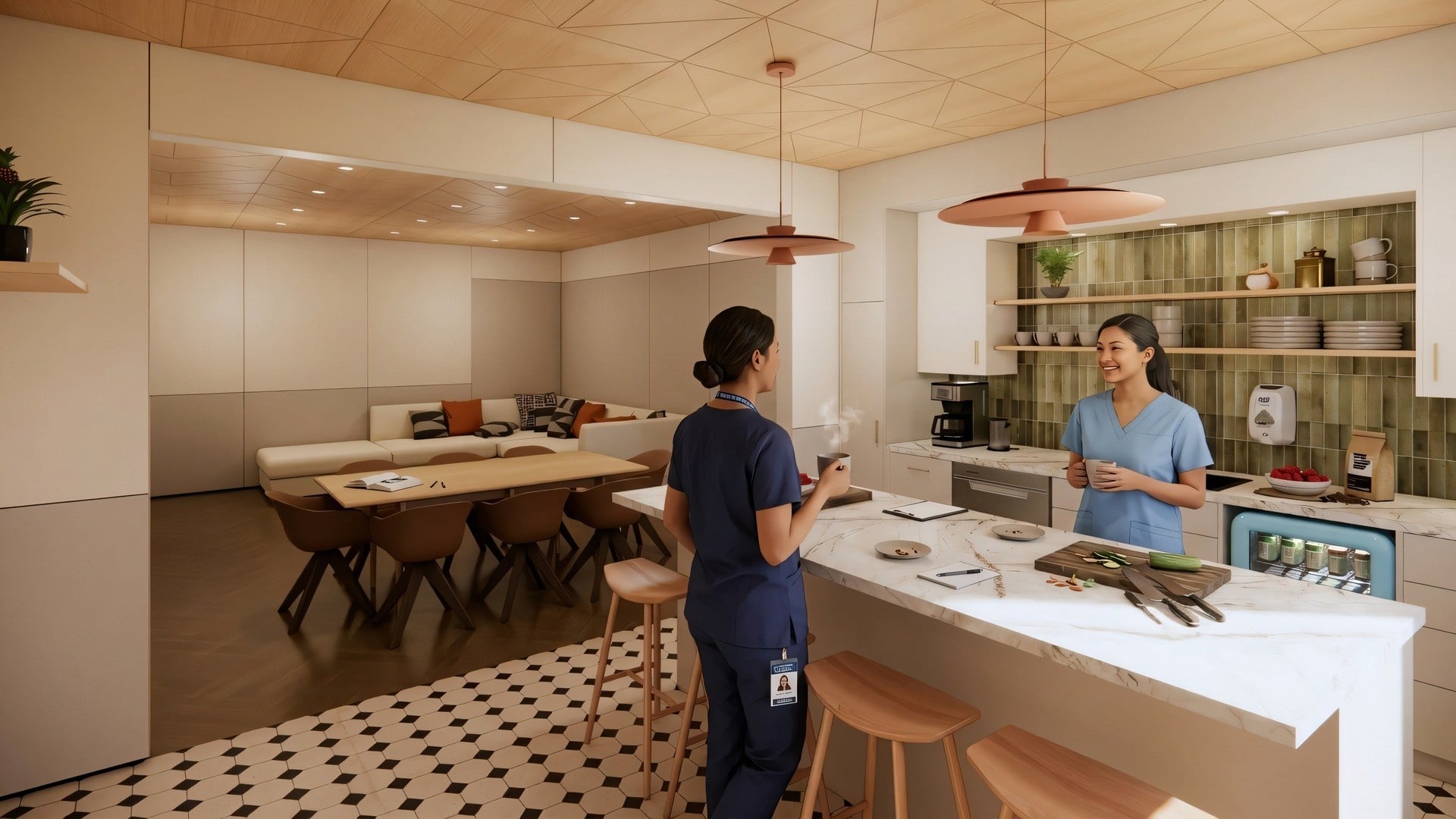
Healthcare systems across North America are facing a growing workforce crisis. Burnout, staffing shortages, and rising stress levels among nurses and clinicians are placing enormous pressure on the people delivering care every day.
Recent data shows that 65% of nurses report experiencing burnout, two-thirds say they would choose another profession if given the chance, and 38% of healthcare staff are actively seeking a different work environment.
Behind every space is a team of healthcare workers doing incredibly demanding work—and they need environments that support them. Burnout has real consequences. Research shows it’s associated with a 26–70% increase in patient safety incidents, reinforcing that caregiver well-being is directly tied to the quality and safety of care. Supporting healthcare workers isn’t optional—it’s essential.
Healthcare facilities are workplaces for caregivers
Hospitals and clinics are designed to support patients, but they are also workplaces for thousands of professionals. The well-being, performance, and engagement of those caregivers directly influence patient outcomes.
Across many industries, organizations have invested in environments that support employee well-being, collaboration, and productivity. Healthcare environments can benefit from similar thinking. When caregivers have access to spaces that allow them to pause briefly, recharge, and regain focus during long shifts, they are better able to sustain the physical and emotional demands of patient care.
Designing healthcare spaces that support
caregiver well-being
At the 2025 Healthcare Design Conference + Expo in Kansas City, a session titled Designed for Joy: Elevating Human Health and Experience in Healthcare Spaces, moderated by Suzen Heely, explored how design can help restore resilience and joy within healthcare environments. Maeve Hegarty, Designer from Falkbuilt HQ, attended the session and came away with a clear takeaway—thoughtfully designed spaces have the power to support not just patients, but the well-being of the people caring for them every day.
Historically, healthcare design has focused almost entirely on patient outcomes. While that focus remains essential, the conversation is expanding to include the well-being of caregivers as well. When caregivers feel supported by their environment, the patient experience improves.
Thoughtful design can introduce restorative areas where staff can decompress between clinical moments, quiet spaces for reflection, and collaborative environments that strengthen connection among colleagues. Flexible rooms can also provide caregivers with places for charting, private conversations, or brief moments of calm during busy shifts.
The performance of the interior environment plays an important role in how caregivers experience their workspace. Elements such as acoustics, spatial organization, and the way interior components shape the flow of the space can influence focus, communication, and stress levels throughout the day.


How Falkbuilt designs healthcare environments that support caregivers
Falkbuilt’s Digital Component Construction allows healthcare teams to create interior environments that support both patient care and caregiver well-being. Rather than relying on disconnected interior products, Falkbuilt delivers a coordinated interior construction solution that integrates walls, ceilings, millwork, and technology infrastructure.
Several performance factors are particularly important for supporting caregivers throughout long shifts.
Quieter environments that support focus
Falkbuilt wall assemblies and acoustic ceiling components help control sound transmission and reduce ambient noise. Many assemblies achieve STC ratings that exceed healthcare standards, helping create quieter environments at nursing stations, charting areas, and staff support spaces.
Durable interiors for high-traffic spaces
Healthcare environments operate continuously and experience constant movement from carts, equipment, and staff. Falkbuilt solid wall solutions and high-performance materials are designed to withstand these conditions while maintaining consistent finishes over time.
Flexible spaces that evolve with care delivery
Healthcare delivery models continue to change. Falkbuilt’s prefabricated digital components allow staff support areas, charting rooms, and collaborative spaces to be reconfigured more efficiently when operational needs evolve.
Efficient installation in active healthcare facilities
Because Falkbuilt components are digitally modeled and manufactured offsite, interiors can be installed quickly with minimal disruption to ongoing clinical operations. The process is clean and largely dust-free, helping healthcare facilities maintain safer conditions while work occurs in active environments.
By combining acoustic performance, durability, flexibility, and digitally coordinated construction, Falkbuilt’s approach helps healthcare organizations create environments that support both the delivery of care and the people who deliver it.
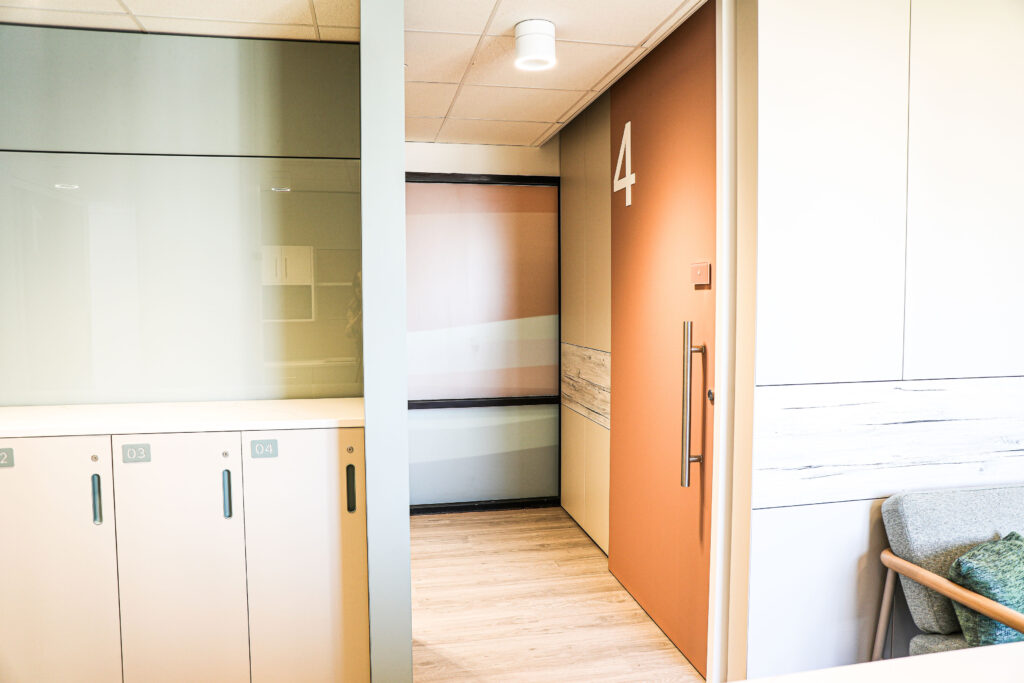

Future-ready healthcare facilities
Healthcare environments must be designed for adaptability. Advances in medical technology and evolving models of care require facilities that can change over time without major disruption.
Future-ready healthcare facilities prioritize flexibility, resilience, and longevity. Interior environments must be able to evolve as clinical needs shift while continuing to perform in high-pressure healthcare settings.
Approaches such as Falkbuilt’s Digital Component Construction allow healthcare organizations to update, reconfigure, and expand interior environments more efficiently while maintaining consistent performance across the built environment. In doing so, interior construction is transformed from a disposable expenditure into a high-performing digital asset that continues to deliver value over time.
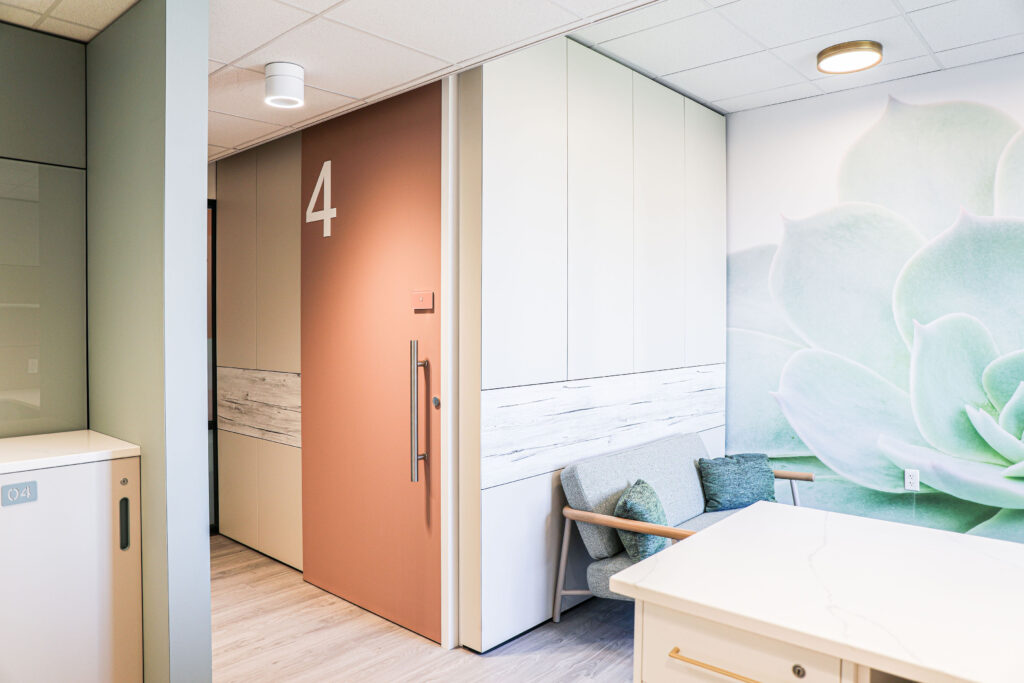

Supporting the people who sustain healthcare
Healthcare design has the potential to improve not only patient experiences, but also the daily lives of the people who provide care. When environments reduce noise, provide restorative spaces, and allow facilities to evolve over time, they help sustain the caregivers who sustain healthcare. Designing environments that support caregivers is one of the most meaningful ways the built environment can contribute to the future of healthcare.